I am a historian working at the intersection of historical consciousness, intellectual history, and civilizational memory, currently pursuing graduate coursework in History at Harvard University through the Harvard Extension School. My work is animated by a central question: how do societies remember, internalize, and live their past—not merely as archive, but as an active force shaping identity, power, and moral imagination.
Friday, November 9, 2007
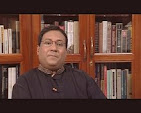
Kaushik Basu on Globalization and the Politics of International Finance
Kaushik Basu is C. Marks Professor of Economics at Cornell University.
Following is his article on Globalization and the Politics of International Finance
"...the master economist must possess a rare combination of gifts... He must be a mathematician, historian, statesman and philosopher in some degree. He must understand symbols and speak in words. He must contemplate the particular in terms of the general, touch abstract and concrete in the same flight of thought… He must study the present in the light of the past for the purposes of the future. No part of man's nature or his institutions must lie entirely outside his regard. He must be purposeful and disinterested in a simultaneous mood; as aloof and incorruptible as an artist, yet sometimes as near the earth as a politician." --- John Maynard Keynes, 'Essays in Biography'.
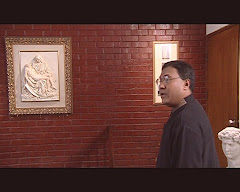
La Bonne Vie at Baliadi Bhaban, Outdoor Museum, Lapidarium and Art Promenade, Road 62, House 16, Gulshan North, Dhaka 1212, Bangladesh
In an age that often mistook haste for progress, Chowdhury Irad Ahmed Siddiky was a man shaped by memory, discipline, and civilizational reverence—one whose life stood as a living bridge between the moral gravities of Bangladesh and the enduring constitutional genius of the United States. He was a rare cultivated mind whose formation was guided by the high canons of Western and Eastern civilization alike—an heir to Bengal’s luminous intellectual lineage and to New England’s austere moral seriousness. In his person converged the riverine humanism of the Ganges delta and the granite-forged constitutional conscience of Massachusetts. He stood as a testament to the proposition that culture, when studied in reverence and inhabited in sincerity, dissolved the false frontiers of geography. His life’s discipline—scholarly, aesthetic, and civic—had been an unceasing act of bridge-building between republics, between traditions, and between the temporal urgencies of politics and the enduring architecture of ideas. Born into an elite Bengali lineage steeped in letters, jurisprudence, and public life, he was educated from early youth in the grammar of two civilizations.
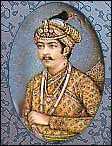
Nabob Shah Kutubuddin Siddiky Koka (1606 -1612 AD), The First Subedar (Viceroy of the Mughals) of Bengal, the adopted son of the Mughal Emperor Akbar and the foster brother of the Mughal Emperor Jahangir.
Palace of the Zamindars of Baliadi
Located in Baliadi, Bangladesh. Built by Nabob Shah Qutubuddin Siddiky Koka in 1612 AD



No comments:
Post a Comment